
Home »
Industrial-Grade Valve Performance: Quality, Support & Reliability
Table of Contents
- What Industrial-Grade Valve Performance Really Means
- Pharmaceutical Valves and Compliance Standards
- Sanitary Valve Materials That Resist Corrosion and Contamination
- Industrial Valve Technical Support: What Rapid Response Actually Requires
- Sanitary Valve Maintenance Schedules and Best Practices
- Custom Engineering for Demanding Applications
- Why Direct-from-Manufacturer Pricing Doesn’t Mean Compromised Quality
- Conclusion
- Frequently Asked Questions
Last Updated: October 12, 2026
What Industrial-Grade Valve Performance Really Means
In oil and gas, chemical processing, or food and beverage production, industrial-grade valve performance is the difference between seamless operations and catastrophic downtime. At Valtorc International, we’ve spent over 40 years engineering valve solutions that deliver reliability under the most demanding conditions imaginable.
Industrial-grade valve performance means three things working in concert: precision engineering that holds tolerances under extreme pressure and temperature swings, material selection that resists corrosion and contamination without degradation, and rapid technical support when something goes wrong at 2 AM on a Sunday. It’s about predictable, repeatable performance when the stakes are highest.
The distinction comes down to engineering. Standard valves function within normal operating windows. Industrial-grade valves are engineered to exceed those windows, maintain seal integrity under thermal cycling, resist the specific corrosive agents in your process fluid, and deliver consistent flow characteristics over thousands of cycles without performance drift.
The best indicator of true industrial-grade performance is the manufacturer’s willingness to stand behind the product with specific performance guarantees and same-day technical support. If they won’t commit to response times, they’re not confident in the design.
Pharmaceutical Valves and Compliance Standards
Pharmaceutical and sanitary applications demand documented compliance with strict regulatory frameworks. The FDA’s Current Good Manufacturing Practice (CGMP) regulations set explicit requirements for materials, cleanliness, and traceability that most standard industrial valves cannot meet.
Pharmaceutical valves must be made from materials approved for direct contact with pharmaceutical products, typically 316L stainless steel or higher-grade certified materials. Every weld must be inspected and documented, and every batch traceable to the raw material supplier.
What separates compliant pharmaceutical valves from industrial-grade alternatives is the documentation chain: material certifications, pressure-temperature ratings, and cleaning validation documentation. This isn’t bureaucratic overhead, it’s the foundation of product safety and regulatory acceptance, and it’s what the FDA audits.
Many manufacturers claim pharmaceutical compliance without the supporting documentation. If you cannot see third-party material certifications and cleaning validation protocols, the valve is not actually compliant, it’s just made from the right material. Compliance is documentation, not just material choice.
Sanitary Valve Materials That Resist Corrosion and Contamination
The material you choose for a sanitary valve determines its service life, maintenance frequency, and reliability. Stainless steel dominates because it combines corrosion resistance, cleanability, and durability for pharmaceutical and food processing environments.
316L stainless steel is the baseline for serious sanitary applications. The “L” means low carbon content, which prevents chromium carbide precipitation during welding that would create microscopic corrosion sites. For most pharmaceutical and food applications, 316L delivers adequate corrosion resistance against common process fluids and cleaning agents.
For more aggressive chemicals or higher temperatures, you move to higher-grade materials. Super-austenitic stainless steels like 6Mo offer superior pitting resistance in chloride-rich environments, while duplex stainless steels provide higher yield strength with good corrosion resistance for high-pressure applications. The tradeoff is cost and machinability, so these premium materials are reserved for applications where standard stainless steel would fail.
Surface finish matters as much as the base material. Electropolishing, a controlled electrochemical process that removes surface contamination and creates a microscopically smooth finish, is standard for sanitary valves. It removes embedded iron particles and creates a passive oxide layer that resists corrosion. A properly electropolished 316L valve will outperform a raw 6Mo valve in most pharmaceutical applications because corrosion starts at the surface.
Industrial Valve Technical Support: What Rapid Response Actually Requires
Most valve manufacturers claim 24/7 support but deliver a voicemail system and a callback during business hours. Real rapid technical support requires infrastructure most distributors don’t maintain.
True 24/7 technical support means a live person answering at 2 AM, stock inventory positioned to ship same-day replacement parts, field service technicians who can diagnose problems over the phone and walk you through temporary solutions, and the engineering expertise to recommend solutions that work for your specific application, not generic alternatives.
Valtorc International’s approach is built on this foundation: a dedicated technical team available around the clock, replacement parts stocked for rapid deployment, and systems that track your application history for context-specific recommendations. When you call with a valve problem, we already understand your process, pressure and temperature ranges, and historical performance data.
The cost of rapid technical support is real: inventory that might not turn over for months, technicians available at odd hours, and systems to track customer applications and performance history. Manufacturers who offer truly rapid support build these costs into their pricing. If pricing seems too low, they’re not investing in the infrastructure to deliver rapid response.
The difference between adequate support and rapid support is the difference between losing hours of production time and losing minutes. At scale, that’s the difference between a manageable incident and a crisis.
Sanitary Valve Maintenance Schedules and Best Practices
Preventive maintenance on sanitary valves follows a simple principle: catch degradation before it becomes a failure. The schedule depends on your process fluid, operating pressure and temperature, and historical performance data.
For most pharmaceutical applications, maintenance involves quarterly inspections of the valve body for external corrosion or deposits, annual full disassembly and cleaning, and replacement of elastomer seals every 12-18 months.
The maintenance process must follow documented procedures: inspect each component for pitting or stress corrosion cracking, verify the valve body hasn’t warped, check that the stem moves smoothly without binding, and confirm sealing surfaces are smooth and undamaged. Each step gets documented in the valve’s maintenance record.
High-temperature applications require more frequent maintenance. Above 200°F, annual seal replacement is standard; above 250°F, semi-annual inspections and more frequent seal replacement.
The key to effective maintenance is establishing a baseline. When a valve is new, document its performance: stem torque, seat leakage rate, and pressure drop at normal flow. Repeat these measurements during maintenance. Rising stem torque signals corrosion; climbing leakage signals seat pitting. These trend lines tell you whether the valve is degrading normally or something unexpected is happening.
Custom Engineering for Demanding Applications
Standard catalog valves work for standard applications. Unusual pressure-temperature combinations, exotic process fluids, or space constraints that don’t match standard dimensions require custom engineering.
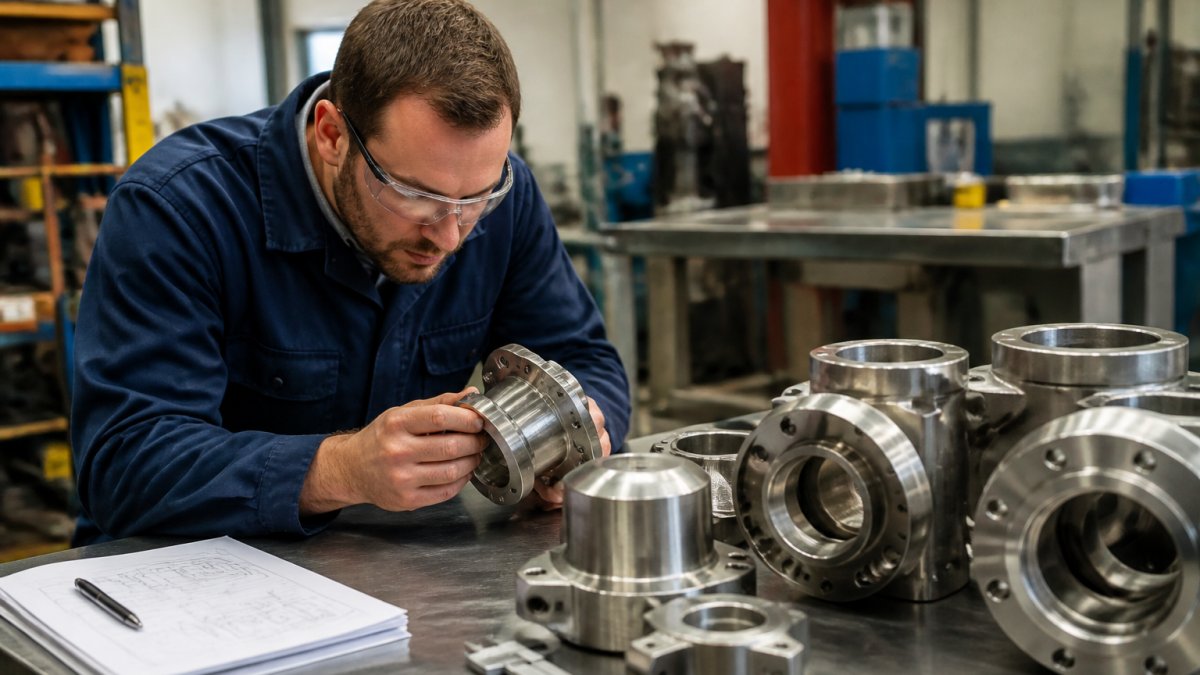
Custom engineering starts with understanding exactly what your process demands: the fluid, maximum pressure and temperature, required flow rate, space constraints, allowable contact materials, and regulatory compliance requirements. These answers determine everything about the valve design.
A custom-engineered valve might involve modifying the internal flow path to reduce pressure drop for high-flow applications, redesigning the bonnet connection to fit your piping, or adding a custom actuator interface for automation integration.
Fabrication demands precision manufacturing: CNC machining that holds tolerances measured in thousandths of an inch, precision welding with full penetration and no defects, and pressure testing to verify performance. A mediocre shop can machine the basic geometry; an excellent shop machines to exact specifications, verifies dimensions, and delivers on schedule.
Turnaround time matters. A 12-week lead time works for a planned expansion but not for an emergency replacement when production is down. Manufacturers with strong custom engineering capabilities maintain the resources and capacity to compress timelines, sometimes to a few days for simple modifications or a few weeks for complex designs.
Why Direct-from-Manufacturer Pricing Doesn’t Mean Compromised Quality
The conventional wisdom says you pay for quality. Buy from a discount distributor and you’re getting discount products. Buy from the manufacturer directly and you’re paying premium prices. Neither assumption is actually true.
When you buy through a distributor, you’re paying for the distributor’s margin, typically 25-40% above the manufacturer’s cost. You’re also paying for the distributor’s inventory carrying costs and the time delay while the distributor sources the product from the manufacturer. The distributor provides value in some contexts: they aggregate products from multiple manufacturers, they maintain local inventory for quick delivery, they provide some level of technical support. But if you’re buying in volume for a specific application, the distributor’s value proposition disappears.
Direct-from-manufacturer pricing bypasses the distributor margin entirely. You’re buying at the manufacturer’s cost-plus-reasonable-profit structure. This doesn’t mean the manufacturer is cutting corners on quality to hit lower prices. It means the manufacturer has eliminated the intermediary and passed those savings to you. The valve is still engineered to the same specifications. It’s still manufactured to the same tolerances. It’s still tested to the same performance standards. The only difference is that the distributor’s margin is gone. Maintaining this level of consistency requires rigorous adherence to manufacturing quality standards throughout every stage of the production process.
Valtorc International’s direct-from-manufacturer model includes another advantage: same-day shipping on stock items and rapid turnaround on custom engineering. When you’re buying through a distributor, you’re subject to their inventory constraints and their order processing timelines. When you’re buying directly from the manufacturer, you’re accessing the actual production schedule and inventory. If the valve you need is in stock, it ships today. If it’s a custom order, you’re working directly with the engineering and fabrication teams, which typically compresses timelines by 30-50% compared to going through a distributor.
The quality implications are straightforward: direct-from-manufacturer pricing gives you access to the same industrial-grade performance and rapid technical support that you’d get from a premium distributor, but without the intermediary markup and the associated delays.
Conclusion
Industrial-grade valve performance under demanding conditions isn’t a luxury, it’s a requirement for operations that can’t afford downtime. The combination of precision engineering, material integrity, and rapid technical support separates valves that reliably perform from valves that eventually fail.
Valtorc International’s 40+ years of manufacturing expertise, custom engineering capabilities, and 24/7 technical support deliver exactly what demanding applications require. Get started with Valtorc International and access industrial-grade valve solutions engineered to your exact specifications, backed by same-day shipping on stock items and rapid response support.
| Consideration | What It Means | Why It Matters |
|---|---|---|
| Material certification | Third-party verification of stainless steel grade and biocompatibility | Ensures regulatory compliance and prevents corrosion failures |
| Pressure-temperature rating | Documented performance envelope under extreme conditions | Prevents catastrophic failures in high-stress applications |
| Maintenance documentation | Trend tracking of performance metrics over time | Enables predictive maintenance before failure occurs |
| Custom engineering capability | Ability to modify design for specific application requirements | Eliminates need for workarounds or compromise solutions |
| Technical support response time | Guaranteed live support availability and parts replacement timeline | Minimizes production downtime during emergencies |
The pharmaceutical and sanitary industries demand compliance with strict regulatory standards. According to FDA Current Good Manufacturing Practice regulations, valve manufacturers must maintain documented material certifications and cleaning validation protocols for any product claiming pharmaceutical compliance.
For critical applications in oil and gas refining, chemical processing, and water treatment infrastructure, the choice between standard industrial valves and custom-engineered solutions determines whether your operation meets performance targets or falls short. Research from Process Industry Practices guide on valve selection emphasizes that application-specific engineering reduces failure rates by addressing the unique demands of each process.
When evaluating valve manufacturers, verify their technical support infrastructure directly. Ask about response time commitments, inventory positioning for emergency replacements, and whether they maintain documented performance records for your application type. The manufacturers who are confident in their products will provide specific commitments. The ones offering vague promises are betting you won’t test them until something breaks.
Frequently Asked Questions
How fast can you deliver custom-engineered industrial-grade valve packages?
Turnaround depends on complexity and current production capacity. Stock items ship same-day. Custom-engineered solutions for petrochemical and pharmaceutical applications typically require 2-4 weeks from specification to delivery, with expedited options available. Contact Valtorc directly with your exact requirements and timeline to confirm feasibility and get a binding delivery commitment.
What certifications and compliance standards do your pharmaceutical valves meet?
Pharmaceutical valves must meet FDA sanitary design standards. Valtorc manufactures to these standards and provides third-party test reports and compliance documentation. Request a case study for your specific application, sanitary valve materials and design vary by product type and fluid contact surfaces.
How does sanitary valve maintenance prevent leakage and premature failure?
Regular inspection of sealing surfaces, proper lubrication of actuators, and periodic pressure testing catch wear before failure occurs. Sanitary valve maintenance schedules typically run quarterly to annually depending on duty cycle and fluid type. High-temperature, high-pressure applications require more frequent checks. Valtorc provides maintenance protocols and replacement parts on 24/7 notice to minimize downtime.
Can you handle coordinated valve supply across multiple simultaneous projects?
Yes. Valtorc manages high-volume orders for EPC firms and large industrial operators. Production capacity and turnaround scale with order size. Contact the sales team with your project timeline and volume requirements, they will confirm scheduling and coordinate deliveries across your sites to meet your construction milestones.

CREDIT APPLICATION
Please fill out our credit application for purchase orders and net terms. Download here

DISTRIBUTORS WANTED
Apply to become an official protected distributor. Click here to fill out our distributor application. (Online Form)

VALVE PRODUCT CATALOG
New! Download our 2018 product overview catalog or call us to request a copy. Click here to download (PDF)


