
Home »
How to Prevent Corrosion in Industrial Ball Valves
Table of Contents
- Why Corrosion Prevention Matters in Industrial Ball Valves
- Selecting Corrosion-Resistant Ball Valve Materials
- Chemical Compatibility for Valve Materials
- Applying Protective Coatings and Surface Treatments
- Implementing a Ball Valve Maintenance Checklist
- Ball Valve Corrosion Inspection and Detection
- Treating and Removing Corrosion
- Frequently Asked Questions
Last Updated: October 18, 2026
Why Corrosion Prevention Matters in Industrial Ball Valves
Corrosion costs industries billions each year. It causes valve failures, emergency shutdowns, and safety risks. For facilities managing oil and gas, chemicals, or water treatment, preventing corrosion in industrial ball valves isn’t optional, it’s critical to operations.
A ball valve that corrodes internally leaks without warning. External corrosion weakens the valve body and stem. Both compromise reliability. When corrosion takes hold, you face unplanned downtime, expensive replacements, and potential environmental or safety incidents.
The good news: corrosion in industrial ball valves is preventable. The key is matching materials to your process fluid, applying protective treatments, and maintaining inspection schedules. At Valtorc International, we’ve engineered automated valve packages for some of the harshest environments. We know what works.
This guide walks you through how to prevent corrosion in industrial ball valves before it starts. You’ll learn material selection, protective coatings, maintenance routines, and inspection protocols.
Corrosion prevention starts at design, choosing the right materials for your specific process fluid and environment. Maintenance and inspection lock in that protection over time.
Selecting Corrosion-Resistant Ball Valve Materials
Material selection is where corrosion prevention begins. The wrong material fails fast. The right one can last decades.
Your choice depends on three factors: the process fluid, operating temperature, and pressure. A ball valve that handles water at room temperature needs different material than one handling hot caustic soda or saltwater.
Stainless Steel Options for Different Environments
Stainless steel dominates industrial ball valve construction because it resists corrosion better than carbon steel. But not all stainless steel is equal.
Low-carbon stainless steel (304/304L) works well in mild corrosive environments, neutral water, light acids, mild alkaline solutions. It’s affordable and commonly available. However, it struggles in high-chloride environments like saltwater or coastal applications.
316 stainless steel adds molybdenum, which improves resistance to chloride pitting. Use 316 for seawater applications, saltwater cooling systems, and chemical plants near coastal areas. It costs more than 304 but prevents failures that would cost far more.
Duplex stainless steel combines the strength of ferritic and austenitic stainless steels. It resists pitting corrosion better than 316 and handles higher pressures and temperatures.
Super-duplex stainless steel offers maximum corrosion resistance for the harshest conditions. Use it when you’re handling very strong acids, high-temperature steam, or extreme pressure. It’s expensive, but it’s the right choice when failure isn’t an option.
Match your stainless steel grade to your specific fluid. Oversizing material costs money upfront but prevents costly emergency replacements. Undersizing saves money today but guarantees problems tomorrow.
Specialty Materials and Internal Linings
Beyond stainless steel, specialty materials and linings extend valve life in extreme conditions.
Brass ball valves resist corrosion in neutral water and some mild chemical applications. They’re less expensive than stainless steel but offer lower pressure ratings.
Aluminum lining inside the valve body protects against certain aggressive fluids. It’s lighter than stainless and works in specific chemical environments. However, aluminum can corrode in alkaline solutions, so verify compatibility before use.
Lead lining was historically used but is now avoided due to health and environmental concerns. Don’t specify it.
Engineering plastics like PTFE (Teflon) linings resist many aggressive chemicals. They work well with strong acids, caustics, and solvents. However, plastics have lower temperature and pressure limits than metal. Use them for lower-pressure chemical applications.
Natural rubber lining protects against mild acids and some alkaline solutions. It’s cost-effective for water and wastewater applications. Rubber fails quickly in high-temperature service, so temperature limits apply.
Chemical Compatibility for Valve Materials
Choosing the right material requires understanding your process fluid. The same stainless steel that works perfectly in one system can corrode rapidly in another.
Matching Materials to Process Fluids and Conditions
Chemical compatibility depends on four variables: the fluid type, concentration, temperature, and pressure.
Fluid type is obvious, water, oil, acid, caustic, or solvent. But concentration matters enormously. A 10% hydrochloric acid solution behaves differently than 50% HCl. Higher concentrations accelerate corrosion.
Temperature increases corrosion rates. Most materials tolerate their rated temperature, but exceeding that limit accelerates attack. A stainless steel valve rated to 400°F will corrode faster at 500°F.
Pressure creates stress on the valve body and seals. High-pressure systems demand materials that resist both chemical attack and stress corrosion cracking. Duplex stainless steel handles this better than 304.
Before specifying a ball valve, verify material compatibility with your process. Many corrosion charts exist. A quick compatibility check prevents failures months or years into service.
Never assume a material works with your fluid without verification. A stainless steel that handles one chemical may fail in another. Incompatibility can cause sudden, catastrophic leakage.
| Fluid Type | Recommended Material | Temperature Limit | Notes |
|---|---|---|---|
| Neutral water | 304 stainless steel | 400°F | Cost-effective for most applications |
| Saltwater / high chloride | 316 stainless steel | 400°F | Prevents pitting in coastal environments |
| Strong acids | Duplex stainless steel | 500°F | Better resistance than 316 |
| Caustic solutions | Duplex or super-duplex | 450°F | Verify specific concentration first |
| Oil and gas | 316 or duplex | 500°F+ | Depends on H₂S content and pressure |
Applying Protective Coatings and Surface Treatments
Even with the right material, surface protection adds another layer of defense against corrosion.
Protective coatings seal the valve exterior from moisture and corrosive gases. They’re especially valuable in outdoor installations or highly corrosive atmospheres.
Epoxy coating is common for carbon steel and some stainless valves. It creates a hard, water-resistant layer. Epoxy works well in atmospheric corrosion environments, plants near the ocean, industrial areas with acid rain, or outdoor storage. Inspect coatings annually for chips or peeling.
Zinc plating (galvanizing) protects carbon steel from rust. Hot-dip galvanizing applies a thick zinc layer that sacrifices itself before the steel underneath corrodes. It’s affordable and effective for mild environments. However, galvanizing fails in highly acidic or alkaline solutions.
Chromium plating adds a thin, hard, corrosion-resistant layer. It’s more decorative than protective for ball valves but improves appearance and slight corrosion resistance on stems and external components.
Passivation is a chemical process that removes iron particles from stainless steel surfaces, making the material more corrosion-resistant.
Implementing a Ball Valve Maintenance Checklist
Maintenance prevents corrosion from starting and catches problems early. A simple routine keeps valves operating reliably.
Inspect ball valves quarterly in normal service, more often in aggressive environments. Look for external rust, discoloration, or white deposits. These signal corrosion beginning.
Check valve operation monthly. Actuate the valve handle or automated actuator through full travel. Stiff operation or grinding sounds indicate corrosion inside the valve. Address this immediately.
Clean external surfaces every six months. Wipe away dirt, salt spray, or chemical residue. These accelerate corrosion. Use mild soap and water for most valves. For stainless steel, use a soft cloth to avoid scratching.
Test for leakage annually. A small drip from the stem packing or seat indicates corrosion damage. Tighten packing nuts carefully if leaking. If tightening doesn’t stop the leak, the valve may need replacement.
Lubrication and Seal Care Without Damage
Lubrication keeps valve stems moving freely and protects seals from drying out. But the wrong lubricant causes problems.
Apply lubricant to the stem packing nut area sparingly. Too much lubricant attracts dirt and salt spray, accelerating corrosion. A light coating is enough.
Never use aggressive solvents to clean valves. Solvents can damage elastomeric seals and coatings. Use mild soap and water instead.
Protect valve seals from UV exposure and extreme temperature swings. Cover outdoor valves or install them in shaded areas when possible. Seal degradation leads to leakage and internal corrosion.
Lubrication extends seal life and keeps stems moving freely. But over-lubrication attracts contaminants. Follow manufacturer guidance exactly.
Ball Valve Corrosion Inspection and Detection
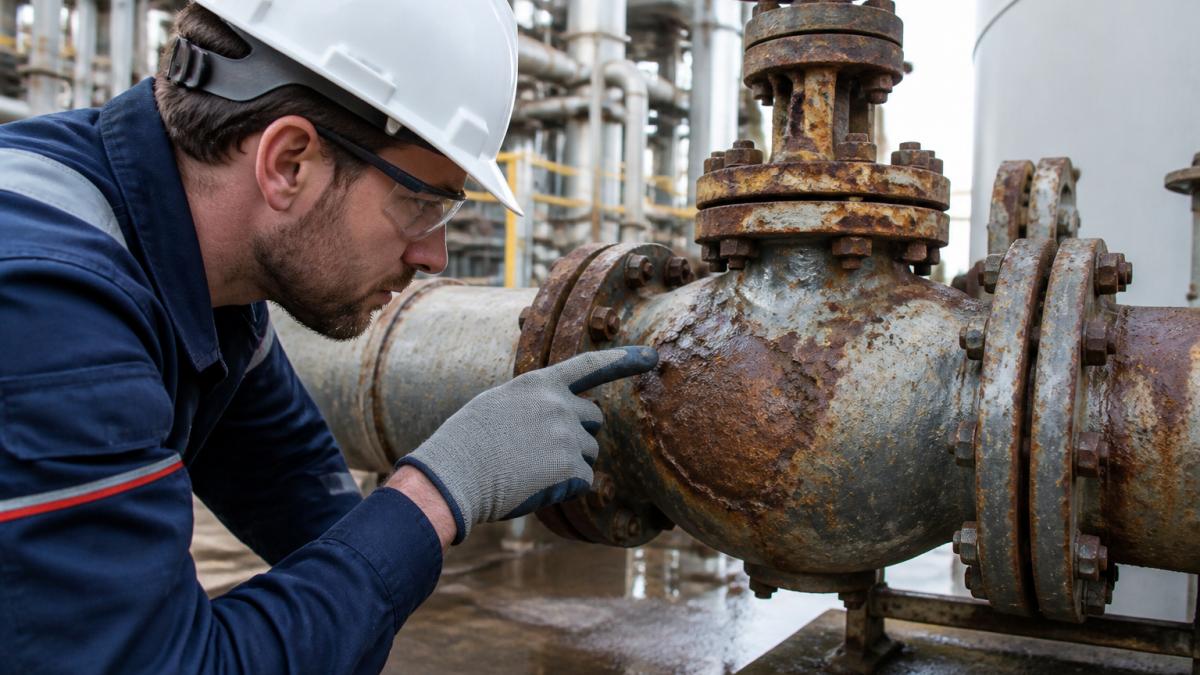
Regular inspection catches corrosion early, before it causes failure. Knowing what to look for makes inspection effective.
Inspection Intervals and Acceptance Criteria
Inspect ball valves in aggressive environments every three months. In normal service, annual inspection is adequate. Increase frequency if you’ve had past corrosion problems.
Document every inspection. Record the valve location, date, any visible corrosion, and corrective action taken. This history helps you spot trends and predict failures.
Accept minor surface discoloration if the valve operates smoothly and doesn’t leak. Light surface rust on carbon steel stems is normal and doesn’t require immediate action. However, pitting, small holes in the surface, signals serious corrosion and requires replacement.
Reject valves with:
- Visible pitting on the ball or seat surfaces
- Stem leakage that doesn’t stop after tightening packing
- Rough or grinding operation indicating internal corrosion
- Cracks in the valve body or welds
- Severe external rust that’s flaking or deep
Recognizing Corrosion Types and Damage Patterns
Pitting corrosion creates small, deep holes in the material. It’s especially dangerous because the damage is localized, the rest of the valve looks fine while internal pitting compromises the seal. Stainless steel in high-chloride environments is vulnerable.
Crevice corrosion occurs in tight spaces, under gaskets, inside threads, or under deposits. The crevice creates an oxygen-starved environment where corrosion accelerates. Keep valve exteriors clean to prevent crevice corrosion from starting.
Galvanic corrosion happens when two different metals contact each other in the presence of an electrolyte (water or moisture). For example, a stainless steel ball in a carbon steel body can trigger galvanic corrosion.
Weld corrosion attacks the heat-affected zone around welds. The welding process can sensitize stainless steel, making it vulnerable. Post-weld heat treatment or using low-carbon stainless steel (304L or 316L) prevents this.
Uniform corrosion appears as general rust or discoloration across the entire surface. It’s slower than pitting but still damages the valve over time. It’s common on carbon steel in wet environments.
Treating and Removing Corrosion
If corrosion has already started, act quickly. Early treatment can save the valve.
For pitting or deep corrosion, replacement is usually the only safe option. Attempting to repair a pitted valve risks sudden failure. The cost of a replacement valve is far less than the cost of unplanned downtime or environmental damage.
Deep corrosion or pitting cannot be safely repaired. Patching a corroded valve is temporary and risky. Replace the valve and address the root cause, material incompatibility, improper maintenance, or environmental factors.
Corrosion in industrial ball valves is preventable. Start with the right material for your process fluid and environment. Apply protective treatments. Maintain a regular inspection schedule. Catch problems early.
When you need custom-engineered ball valve solutions built to withstand your specific process conditions, Valtorc International delivers. We’ve engineered automated valve packages for refineries, petrochemical plants, and water treatment facilities for over 40 years. Our team specifies the exact materials, coatings, and configurations your application demands. Direct-from-manufacturer pricing and same-day shipping on stock items means you get the performance you need without the markup. Request a quote today and let us engineer the corrosion-resistant solution your facility deserves.
Frequently Asked Questions
What causes corrosion in industrial ball valves?
Corrosion in ball valves occurs when the valve body, stem, or internal components react with process fluids, oxygen, or moisture. Galvanic corrosion happens when dissimilar metals contact each other; pitting corrosion creates localized holes in the material; and crevice corrosion develops in tight spaces where oxygen is restricted. Temperature, pressure, fluid chemistry, and material compatibility all accelerate corrosion rates. Choosing the right corrosion-resistant ball valve materials and matching them to your specific process fluid prevents most failures.
How often should industrial ball valves be inspected for corrosion?
Inspection frequency depends on service conditions. In mild environments, annual inspections are typically sufficient. In aggressive or high-temperature applications, inspect every 3 to 6 months. Check more frequently if the valve operates in corrosive media or if previous failures have occurred. During each inspection, look for visible rust, pitting, discoloration, or leakage around the stem. Document findings to track corrosion rates and plan replacement before failure occurs.
Which materials are most resistant to corrosion in ball valves?
Low-carbon stainless steel (304/304L) works well in mild corrosive environments. For harsher conditions, duplex stainless steel (2205) offers superior resistance and higher strength. Super-duplex stainless steel (2507 or 6Mo) handles extremely aggressive media and high temperatures. For internal protection, engineering plastics can be combined with a corrosion-resistant body. Always verify chemical compatibility for valve materials specific to your process fluid and operating conditions.
Can you remove corrosion from a ball valve without replacing it?
Light surface rust can be removed by cleaning and rinsing. However, deep pitting, weld corrosion, or crevice corrosion that compromises structural integrity or sealing surfaces usually requires valve replacement. Rust removal and neutralization work only if corrosion is caught early and has not penetrated critical sealing areas. When in doubt, consult the valve manufacturer about safe repair limits.

CREDIT APPLICATION
Please fill out our credit application for purchase orders and net terms. Download here

DISTRIBUTORS WANTED
Apply to become an official protected distributor. Click here to fill out our distributor application. (Online Form)

VALVE PRODUCT CATALOG
New! Download our 2018 product overview catalog or call us to request a copy. Click here to download (PDF)


