
Home »
Best Automated Valve Packages for Water
Table of Contents
- What Automated Valve Packages Do and Why They Matter
- Electric vs Pneumatic Valve Actuators for Water Systems
- Automated Valve Sizing Guide: Matching Capacity to Your System
- Key Features of High-Performance Automated Valve Packages
- Actuator of Valve Maintenance Best Practices
- Industrial Applications and Compliance Standards
- Selecting the Right Automated Valve Package for Your Needs
- Frequently Asked Questions
Last Updated: October 5, 2026
What Automated Valve Packages Do and Why They Matter
Automated valve packages control water flow without manual intervention, using actuators to open and close valves based on programmed conditions or sensor inputs. The best automated valve packages for water combine precision engineering with reliability, reducing operational costs and preventing water damage across industrial, commercial, and residential applications.
According to the EPA’s 2026 Drinking Water Infrastructure Needs Survey, the drinking water sector requires $625 billion in long-term infrastructure investment, with automated valve packages playing a critical role in modernizing treatment plants, distribution systems, and emergency shutoff capabilities. Market demand reflects this urgency: the automatic water control valves market was estimated at $5.17 billion in 2025 and is projected to reach $5.53 billion in 2026, growing at a CAGR of 8.95% 360iResearch Automatic Water Control Valves Market Report.
At Valtorc International, we’ve engineered automated valve packages for over 40 years across oil and gas, food and beverage, and water infrastructure sectors. The core value lies in three areas: reducing manual labor, enabling remote operation, and preventing costly failures through fail-safe design and automatic shutoff capabilities.
The most overlooked factor when selecting automated valve packages is fail-safe behavior during power loss. A valve that closes on power failure prevents catastrophic leaks; one that stays open can cost thousands in water damage. Always verify the fail-safe mode matches your application’s risk profile.
Electric vs Pneumatic Valve Actuators for Water Systems
The choice between electric and pneumatic actuators defines the entire system’s operating characteristics, cost structure, and maintenance profile. There’s no single best approach, the decision depends on pressure requirements, power availability, and response speed.
Electric actuators use motors to drive valve stems or ball rotation. Electric ball valves and solenoid valves dominate residential and light commercial installations because they plug into standard power outlets and offer app-based remote operation.
The trade-off: electric systems require reliable power supply and cost more upfront than pneumatic alternatives.
Pneumatic actuators use compressed air to move valve components. They’re faster than electric systems, safer in hazardous environments (no spark risk), and cheaper to install.
The limitation: pneumatic systems require an air compressor, which adds operational complexity and ongoing maintenance. You also lose remote control without additional solenoid valve layers, making them less practical for smart-home integration.
According to Electric Solenoid Valves technical guidance, the choice between solenoid valves and electric ball valves depends on pressure rating and power source.
For water main shutoff applications, electric ball valves are the practical choice. They’re compact, require no air compressor, integrate with leak sensors, and can operate on battery backup during power outages.
Automated Valve Sizing Guide: Matching Capacity to Your System
Oversizing or undersizing an automated valve creates problems that appear months after installation. A valve too small restricts flow and triggers pressure drops; one too large wastes energy and reduces control precision.
Pipe size is the starting point. Most residential water mains are 1 inch or 1.5 inches in diameter. Commercial systems range from 2 to 4 inches.
Flow rate determines the valve body size. Measured in gallons per minute (GPM), flow rate tells you how much water the system handles under normal conditions. A residential home typically uses 8-15 GPM at peak demand.
Pressure rating must exceed your system’s operating pressure. Most residential systems operate at 40-60 PSI. Industrial systems range from 80 to 200+ PSI.
Response time matters for leak detection. If your automated valve package includes leak sensors, the actuator must close within 2-5 seconds of detecting abnormal flow. Slower response times allow water to escape during the closure window. Solenoid valves respond faster (under 1 second) than electric ball valves (2-5 seconds), making them preferable for high-risk applications.
Valtorc International sizes every custom package to your exact specifications, pipe diameter, flow rate, pressure rating, and response requirements. Oversizing adds cost and energy waste; undersizing creates operational bottlenecks. Our team calculates the right fit during the design phase.
Key Features of High-Performance Automated Valve Packages
The difference between a basic valve and a high-performance automated valve package lies in four critical areas: pressure handling, fail-safe design, response speed, and long-term reliability.
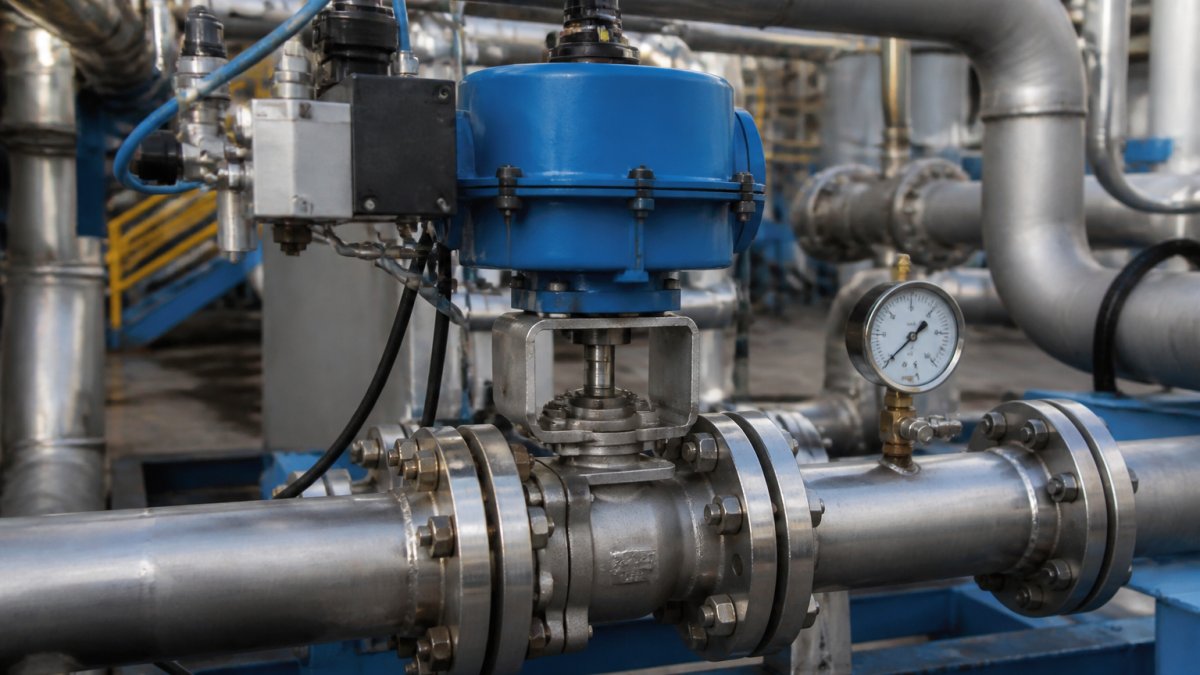
Pressure Rating and Flow Capacity
Pressure rating defines the maximum PSI the valve can safely handle. Industrial-grade automated valve packages are rated for 150, 200, or 300+ PSI depending on application. Residential packages typically max out at 150 PSI. Exceeding the pressure rating causes seal failure and leakage, a silent failure mode that wastes water for weeks before detection.
Flow capacity is measured in GPM and determines how much water the valve can pass without creating backpressure. A 2-inch valve rated for 150 GPM can handle typical commercial applications. A 4-inch valve rated for 500+ GPM serves utility-scale systems. Undersizing creates pressure drops that starve downstream equipment; oversizing wastes energy on unnecessary valve size.
The best automated valve packages for water balance these two metrics. A valve oversized for your flow creates control lag and reduces actuator precision. One undersized for your pressure triggers relief valves and system shutdowns.
Fail-Safe Design and Emergency Shutoff
Fail-safe behavior determines what happens when power fails, the actuator breaks, or the control signal is lost. There are two modes:
- Fail-closed: The valve closes, shutting off water flow. This prevents catastrophic flooding but may interrupt service to downstream users.
- Fail-open: The valve stays open, maintaining flow. This preserves service but risks water loss if a pipe ruptures.
For water main shutoff applications, fail-closed is mandatory. For continuous-operation systems (water treatment plants, irrigation networks), fail-open is standard.
Emergency shutoff capability lets operators manually close the valve even if the actuator fails. A manual override handle, accessible without tools, is essential for any automated valve package. This feature has prevented countless water damage incidents when electronic systems malfunction.
Valve Response Time and Reliability
Response time is the interval between receiving a shutdown signal and the valve fully closing. Solenoid valves respond in under 1 second. Electric ball valves take 2-5 seconds depending on actuator power. Pneumatic systems respond in 0.5-2 seconds.
For leak detection systems, fast response time is critical. A 5-second delay on a burst pipe allows 5-10 gallons to escape. A 0.5-second response limits loss to under 1 gallon.
Reliability over 10+ years depends on seal quality, actuator durability, and corrosion resistance. Stainless steel bodies resist rust in wet environments. Bronze or ductile iron bodies suit most applications. The actuator’s bearing system determines how many cycles it can handle, some automated valve packages tolerate 100,000 cycles; premium packages handle 500,000+.
Cheap automated valve packages often fail within 3-5 years because they use low-grade seals and single-stage actuators. The cost savings disappear when you replace the entire system. Invest in packages rated for 100,000+ cycles if you want 10-year reliability.
Actuator of Valve Maintenance Best Practices
Maintenance determines whether your automated valve package lasts 5 years or 15.
Annual inspection is the minimum standard. Check for leakage around the valve stem, corrosion on the actuator housing, and debris accumulation.
Actuator testing every 12-18 months ensures the motor or solenoid still responds to commands. Manually trigger the valve closure and verify it closes within the rated response time.
Seal replacement every 5-7 years prevents leakage. Seals degrade from temperature cycling, pressure stress, and water chemistry exposure. Replacing seals costs $200-500 and takes 2-3 hours.
Corrosion protection extends actuator life in wet environments. Apply a thin coat of marine-grade grease to exposed metal surfaces annually. In high-chlorine environments (pools, water treatment plants), stainless steel actuators are mandatory.
Valtorc International provides detailed maintenance guides with every automated valve package, and our 24/7 support team can troubleshoot issues remotely or dispatch replacement parts the same day if a failure occurs.
Industrial Applications and Compliance Standards
Automated valve packages operate across water treatment, petrochemical processing, food and beverage production, and irrigation networks. Each sector has distinct regulatory requirements and performance expectations.
Water treatment plants require fail-safe shutoff capability and precise flow control. The actuator must tolerate chlorine exposure, high-pressure cycling, and continuous operation. Butterfly valves remain the preferred choice for water and wastewater applications due to their compact design, lighter weight, and efficient throttling capabilities compared to other valve types WaterTech 2026 Industrial Valves Guide.
Food and beverage production demands sanitary valve design and FDA/MOCA compliance. The valve body must be cleanable without disassembly, seals must be food-safe, and all wetted surfaces must resist corrosion. Automated valve packages in this sector include CIP (clean-in-place) ports and stainless steel construction as standard.
Oil and gas refineries operate at extreme pressures and temperatures. Automated valve packages must handle 300+ PSI, resist thermal cycling, and tolerate corrosive fluid exposure. These systems cost significantly more but prevent catastrophic failures that could injure workers or damage equipment.
Irrigation networks prioritize energy efficiency and wireless control. Automated valve packages enable remote operation across distributed systems, reducing labor costs and enabling rapid response to weather changes. Battery-backed electric actuators are standard in this sector.
Selecting the Right Automated Valve Package for Your Needs
The selection process narrows down to five decision points: application type, pressure and flow requirements, power source availability, fail-safe mode, and budget.
Start with your application. Are you protecting a single water main, controlling flow in a treatment plant, or managing an irrigation network?
Next, determine pressure and flow. Measure your system’s maximum operating pressure (PSI) and peak flow rate (GPM). Add 25% to the pressure rating as a safety margin.
Evaluate power sources. If reliable electricity is available, electric actuators offer simplicity and remote control. If compressed air infrastructure exists, pneumatic actuators are cost-effective.
Define fail-safe requirements. For water main shutoff, fail-closed is mandatory. For continuous-operation systems, fail-open is standard. This decision shapes the entire actuator selection.
Finally, compare total cost of ownership, not just purchase price.
| Selection Criteria | Residential | Commercial | Industrial |
|---|---|---|---|
| Typical Pressure | 40-60 PSI | 80-150 PSI | 150-300+ PSI |
| Typical Flow | 8-15 GPM | 50-150 GPM | 200+ GPM |
| Actuator Type | Electric | Electric or Pneumatic | Pneumatic or High-Pressure Electric |
| Fail-Safe Mode | Fail-Closed | Fail-Closed | Application-Specific |
| Response Time | 2-5 seconds | 1-3 seconds | 0.5-2 seconds |
Selecting the best automated valve packages for water requires matching technical specifications to your system’s actual demands. Oversizing adds unnecessary cost and complexity. Undersizing creates operational failures and safety risks.
At Valtorc International, we engineer custom automated valve packages to your exact specifications.
Frequently Asked Questions
What is the best automatic water shutoff valve for industrial use?
The best automatic water shutoff valve depends on your system’s pressure rating, flow capacity, and power availability. Electric ball valves suit applications requiring precise flow control and remote operation via mobile app or Wi-Fi. Solenoid valves excel in high-speed shutoff scenarios with automatic triggers from leak sensors. Industrial-grade automated valve packages from manufacturers with 40+ years of experience offer custom engineering to exact specifications, ensuring durability under high-temperature and high-pressure conditions. Verify third-party certifications and documented case studies for your application type before selecting.
What factors determine the sizing of an automated valve package?
Automated valve package sizing depends on pipe diameter, flow rate (measured in gallons per minute), system pressure rating (PSI), and the type of fluid being controlled. Undersized valves restrict flow and reduce efficiency; oversized valves waste energy and may not provide precise control. Calculate your system’s maximum flow demand, account for pressure drops across the valve, and verify that the actuator can operate at your system’s working pressure. Consult technical specifications for valve response time and ensure the package matches your potable water or specialized fluid requirements.
Are automated valve packages worth the investment for water treatment?
Yes, automated valve packages deliver measurable returns through leak prevention, reduced water damage, and operational efficiency. Key benefits include emergency shutoff capability when leak sensors detect anomalies, remote operation and mobile app control for real-time monitoring, and fail-safe design that protects against pressure spikes or power failures. Total cost of ownership improves when you factor in water savings, insurance premium reductions, and downtime prevention.
What are the main differences between electric and pneumatic valve actuators for water systems?
Electric valve actuators use AC or DC power to drive solenoid mechanisms or motor-driven ball valves, offering precise control, wireless connectivity, and remote operation via Wi-Fi or mobile app. Pneumatic actuators rely on compressed air, requiring an air compressor and tubing infrastructure but delivering fast response times and intrinsic safety in hazardous environments. Electric actuators suit smart-home integration and distributed control; pneumatic systems excel in high-speed shutoff and remote locations without electrical power. Battery backup options enhance reliability for electric systems during power outages.

CREDIT APPLICATION
Please fill out our credit application for purchase orders and net terms. Download here

DISTRIBUTORS WANTED
Apply to become an official protected distributor. Click here to fill out our distributor application. (Online Form)

VALVE PRODUCT CATALOG
New! Download our 2018 product overview catalog or call us to request a copy. Click here to download (PDF)


