
Home »
Benefits of Direct From Manufacturer Valves
Table of Contents
- Why Direct From Manufacturer Valves Matter for Industrial Operations
- Buying Valves Directly From Manufacturer vs Distributor
- Cost Efficiency and Pricing Transparency
- Industrial Valve Lead Times and Product Availability
- Custom Industrial Valves Built to Your Specifications
- Valve Manufacturer Technical Support and Quality Assurance
- Manufacturing Oversight and Reliability You Can Trust
- Conclusion
- Frequently Asked Questions
Last Updated: October 14, 2026
Why Direct From Manufacturer Valves Matter for Industrial Operations
The U.S. industrial valves market is driven by oil and gas, chemical processing, water treatment, and food and beverage demand. Yet many operations still source through distributors, paying markups and accepting longer lead times. Direct from manufacturer valves eliminate the middleman, delivering cost savings, faster delivery, and manufacturing oversight you can trust.
This guide covers the real advantages of buying valves directly from the manufacturer, and the trade-offs to consider.
The biggest mistake procurement teams make is assuming all direct-from-manufacturer suppliers offer the same service level. Lead time, technical support quality, and customization capability vary widely. Verify credentials and ask for references before committing.
Buying Valves Directly From Manufacturer vs Distributor
Buying through a distributor means paying for their inventory, sales team, logistics network, and margin. That makes sense for small, one-off purchases, but becomes a liability for regular or custom orders.
A distributor stocks popular SKUs and offers fast delivery on commodity items, useful for emergency restocks. But they rarely customize, can’t guarantee lead times on engineered solutions, and have no visibility into production quality.
Direct from manufacturer valves work differently. The manufacturer controls the entire supply chain, design, production, quality assurance, and shipping. According to IBISWorld’s Valve Manufacturing analysis, the U.S. valve manufacturing sector generated $38.0 billion in revenue through 2026, with manufacturers increasingly offering direct sales to reduce distributor dependency.
The trade-off: You need volume or a strategic relationship to justify direct purchasing. A single emergency order may still be cheaper through a distributor. But if you buy valves regularly, monthly or quarterly, direct sourcing pays for itself within the first order cycle.
| Sourcing Channel | Lead Time | Customization | Cost | Support | Quality Control |
|---|---|---|---|---|---|
| Distributor | 5-10 days (stock) | Limited | Higher (markup) | Transactional | Limited visibility |
| Direct Manufacturer | 2-7 days (engineered) | Full | Lower (no middleman) | Technical + 24/7 | Direct oversight |
Cost Efficiency and Pricing Transparency
Direct from manufacturer valves eliminate distributor markup, but the headline price is only one line in the cost equation. The real comparison is total cost of ownership (TCO): purchase price plus freight, inspection, inventory carrying cost, maintenance, downtime, and replacement over the valve’s service life. Most teams that switch find the purchase price advantage modest, while the TCO advantage is where the money shows up.
Here’s how the cost buckets break down comparing a distributor purchase to a direct purchase of the same valve package:
- Unit price. A distributor adds a margin covering inventory, sales, and logistics. On commodity valves the markup is often low double digits; on engineered or automated packages it can be substantially higher because the distributor prices risk and engineering time they cannot control.
- Freight and logistics. Direct shipments may move factory-to-dock in one leg, but you may absorb freight coordination, customs brokerage, and receiving labor. Distributors often bundle freight into the unit price, hiding the cost without removing it.
- Incoming inspection. Distributor valves arrive with the distributor’s paperwork, not the factory’s, so quality systems requiring material certs, test reports, and traceability mean heavier inspection. Direct purchases typically arrive with the manufacturer’s documentation package, reducing inspection labor.
- Inventory carrying cost. Distributor stock lets you buy small quantities; direct purchases often carry minimum order quantities, so you may hold more stock. Carrying cost is commonly estimated at 20-30% of inventory value per year including capital, space, insurance, and obsolescence.
- Maintenance and downtime. A valve that fits the application precisely lasts longer and fails less often. In continuous-process industries, even a few hours of unplanned outage can exceed the valve’s purchase price, which is where customization and direct engineering support pay back fastest.
- Replacement and warranty. Direct purchases put warranty and defect claims in front of the party that built the product; distributor purchases route claims through a third party, slowing resolution and blurring accountability.
A practical comparison: build a simple 5-year TCO model for one valve position, listing unit price, freight, inspection hours, average inventory, expected maintenance events, downtime hours, and replacement frequency, with your own internal cost rates for labor and downtime.
Pricing transparency is the second half of the equation. A distributor quote bundles product, margin, freight, and risk into one number. A manufacturer quote can be itemized: valve body, trim, actuator, mounting, testing, documentation, and delivery. Itemized quotes let you negotiate specific elements, substitute materials, drop unneeded features, and compare manufacturers apples-to-apples.
The purchase price is the smallest part of the story. Build a 5-year TCO model that includes freight, inspection, inventory carrying cost, maintenance, downtime, and replacement. Direct sourcing usually wins on TCO when volume is steady and customization matters; distributor sourcing usually wins on one-off emergency buys.
Industrial Valve Lead Times and Product Availability
Lead time is where direct from manufacturer valves deliver the biggest operational advantage. Distributors stock standard configurations. Anything custom, different port sizes, materials, actuator types, or mounting brackets, goes on backorder. You’re waiting weeks or months for something the manufacturer could produce in days.
Direct manufacturers control production scheduling: they can prioritize a custom automated valve package in two weeks or coordinate production across a large project timeline. Distributors can’t, because they don’t own the factory.
According to IMARC Group’s Industrial Valves Market analysis, the U.S. industrial valves market grew from $10.05 billion in 2020 to $11.84 billion in 2025, with availability and delivery speed becoming competitive differentiators.
For EPC firms managing water treatment builds or petrochemical expansions, lead time directly impacts schedules, a 4-week distributor delay can cascade into cost overruns. Direct manufacturers offer production visibility and can adjust timelines to match your project.
Custom Industrial Valves Built to Your Specifications
Industrial applications rarely use off-the-shelf valves: food and beverage needs sanitary designs with FDA and MOCA compliance, refineries need high-temperature, high-pressure configurations, and water treatment plants need specific flow rates and pressure ratings.
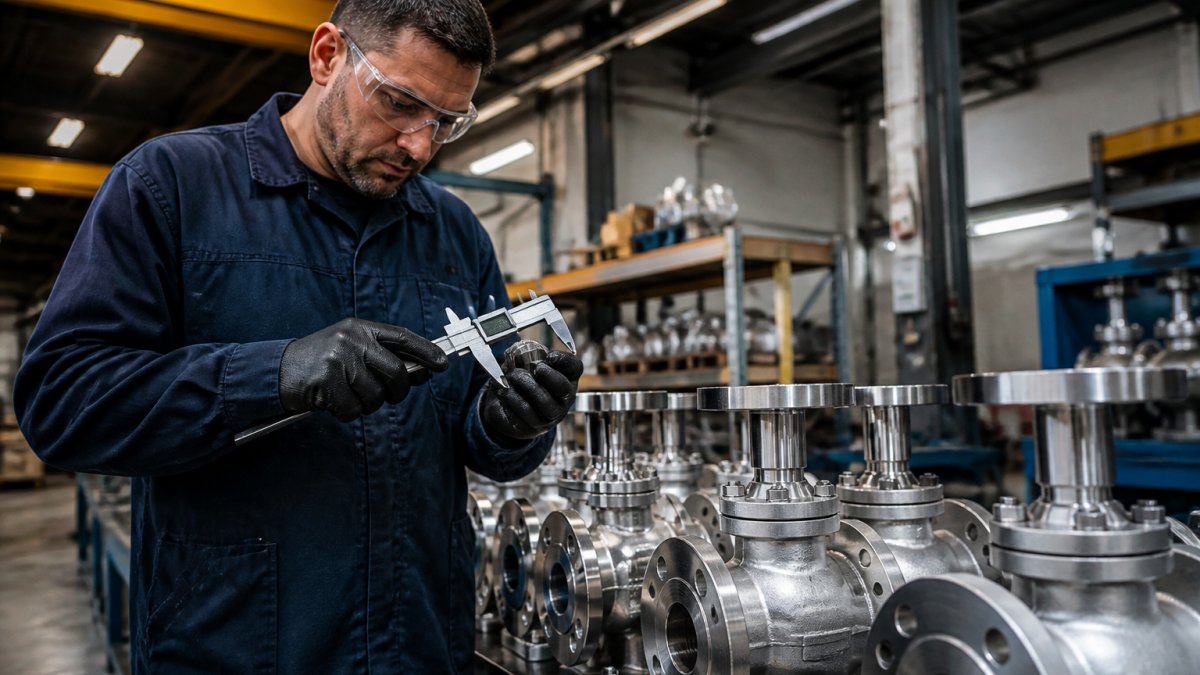
Working direct from manufacturer means collaborating with engineers who understand your application, recommending materials, actuator types, and configurations optimized for your system, then running simulations, testing prototypes, and documenting performance to your specs.
This is where custom industrial valves create real value. A generic valve might work 80% of the time; a custom-engineered solution works 100%, with lower maintenance, longer service life, and better reliability.
Valtorc International’s commitment to custom-engineered solutions, designed to exact specifications, means your valve package is built for your exact conditions, not for a generic market segment.
Valve Manufacturer Technical Support and Quality Assurance
Distributor technical support is limited by design: they can answer basic questions and process returns, but they didn’t design the valve. When leakage, pressure drop, or unexpected wear occurs, they’re often guessing or waiting on the factory.
Quality assurance is where direct from manufacturer valves prove their value most clearly, but only if you verify it. The manufacturer controls material sourcing, machining tolerances, assembly, testing, and shipping, and is accountable for defect rates because their reputation depends on it. A distributor has no quality control; they resell someone else’s work.
Every supplier claims strong quality systems, so buyers need a way to separate real manufacturers from trading companies and repackagers. Use this checklist before you commit:
- Factory ownership. Ask for the legal entity name, the physical address of the production facility, and a recent utility bill or business license for that address. A trading company will often give you a registered office address, not a factory.
- Certifications. Request current certificates for the quality management system (for example, ISO 9001) and any product-specific certifications relevant to your industry, such as API monograms for oil and gas, NSF/ANSI 61 or 372 for drinking water, or FDA-compliant materials for food and beverage. Check the certificate number and expiration date directly with the issuing body rather than accepting a PDF at face value.
- Traceability. Ask how heat numbers, material certs, and test reports are linked to the finished valve. A real manufacturer can trace a serial number back to the raw material lot and the test bench record. A reseller usually cannot.
- Testing documentation. Request the factory acceptance test (FAT) procedure and a sample report. For critical service, ask about hydrostatic testing, seat leakage class, and actuator function testing. Confirm whether testing is done in-house or outsourced.
- Defect and warranty data. Ask for defect rate trends and how warranty claims are handled. A manufacturer with a documented quality system will have this data. A reseller will deflect.
- References. Ask for two or three customers in applications similar to yours and call them. Ask specifically about response time when something went wrong, not just whether the product worked.
- Audit access. Ask whether you or a third-party inspector can visit the factory or witness testing. Manufacturers with nothing to hide say yes.
Technical support quality varies just as widely. Before committing, ask about response times, escalation procedures, after-hours availability, and whether support is handled by engineers or sales staff. For automated valve packages, confirm the team can help with actuator sizing, control signal compatibility, and field troubleshooting, not just order entry.
A common mistake is assuming all manufacturers offer the same level of support and quality documentation. Ask specifically about response times, escalation procedures, after-hours availability, and audit access before committing. If a supplier cannot answer these questions clearly, treat that as a signal.
Buying direct from a verified manufacturer lets you audit quality processes, review third-party certifications, and request case studies from similar applications, transparency that turns a quality claim into confidence you’re getting a reliable product rather than a lottery ticket.
Manufacturing Oversight and Reliability You Can Trust
The biggest risk in buying industrial valves is hidden defects. A valve that works fine in initial testing may fail under real operating conditions, high temperature cycling, corrosive fluids, extreme pressure swings.
Direct from manufacturer valves come with manufacturing oversight you can verify: visit the factory, observe production, review quality documentation, and ask engineers about design decisions, material choices, and testing protocols. That transparency is impossible with distributor sourcing because the distributor isn’t the manufacturer.
Manufacturing oversight also means tracking your order through production, when it’s built, tested, and shipped, and coordinating with the manufacturer if your project timeline shifts. Distributors can’t offer this because they don’t own the factory.
For critical applications in oil and gas, food and beverage, or water treatment, manufacturing oversight isn’t optional: regulators, insurers, and your own risk management require documented quality control. Direct manufacturers provide it; distributors can’t, because they didn’t produce the product.
Conclusion
Direct from manufacturer valves eliminate the distributor middleman, delivering cost savings, faster delivery, customization, and technical support distributors can’t match. For industrial operations buying valves regularly, direct sourcing is almost always the better choice.
The decision isn’t whether to buy direct, it’s finding the right manufacturer partner. Verify credentials, ask for references, and confirm they can handle your volume and complexity. At Valtorc International, we’ve built our reputation on direct-from-manufacturer pricing, fastest turnaround times in the industry, custom engineering to exact specifications, and 24/7 support. Request a quote today and see how direct sourcing can reduce your valve costs while improving reliability and delivery speed.
Frequently Asked Questions
What are the main benefits of buying industrial valves directly from a manufacturer?
Direct-from-manufacturer purchasing eliminates intermediary markups, giving you access to factory-direct pricing and reduced costs. You gain direct access to production standards, quality control processes, and manufacturing oversight. Lead times shorten because you work directly with the source, and you receive expert technical support from engineers who designed the product. Custom engineering for your specific application requirements becomes straightforward since there’s no intermediary interpreting your needs.
Is it better to buy valves from a manufacturer or a distributor?
The answer depends on your priorities. Manufacturers offer cost efficiency, faster lead times, direct quality assurance, and custom engineering. Distributors provide convenience for small orders and may offer immediate local availability for standard products. For large-scale industrial operations requiring high-performance automated valve packages or custom solutions, direct-from-manufacturer sourcing typically delivers superior total cost of ownership, faster turnaround, and better alignment with your exact application requirements.
Can buying valves directly from a manufacturer reduce lead times?
Yes. Purchasing directly from the manufacturer eliminates distributor processing steps and inventory delays. For standard stock items, same-day shipping is often available. For custom industrial valves engineered to your specifications, direct communication with manufacturing teams accelerates the design-to-delivery cycle. You avoid the supply-chain delays inherent in distributor networks, making direct sourcing especially valuable when you face tight project timelines or urgent replacement needs.
Can valve manufacturers customize products for specific applications?
Absolutely. Established valve manufacturers specialize in custom engineering designed to exact specifications. They work with your process engineers to understand your pressure ratings, flow control requirements, fluid compatibility, temperature ranges, and system compatibility needs. Custom industrial valves are engineered for your unique application rather than forcing a standard product into an imperfect fit. This customization improves operational efficiency, reduces downtime, and ensures reliable operation under your exact operating conditions.

CREDIT APPLICATION
Please fill out our credit application for purchase orders and net terms. Download here

DISTRIBUTORS WANTED
Apply to become an official protected distributor. Click here to fill out our distributor application. (Online Form)

VALVE PRODUCT CATALOG
New! Download our 2018 product overview catalog or call us to request a copy. Click here to download (PDF)


